Level Designer
Stage Fright: On Opening Night
Co-op top-down puzzle platformer
Introduction
The goal was a cohesive co-op puzzle experience built around a strong world and a clear design vision, one I held from start to finish while guiding level design, game design, and all technical work in Unreal Engine.
The main challenges I set for myself: designing genuinely for two players simultaneously, where every space and puzzle had to work as a shared experience rather than a solo one, and deepening my technical involvement by building the tooling the team needed to work efficiently.
Details
-
Worked on Level Design, Level Art & Technical Design
-
Created things from the overall world design to environmental art
-
Team of around 16 people
Overview
Synopsis
Stage Fright: On Opening Night is a local co-op puzzle game where two mimes explore ancient ruins to reunite a scattered theatre troupe, made in six weeks by Smoggers, built entirely in our own custom engine.
My work spanned the full level design pipeline: I owned the overall layout and structure of the game, the design and execution of the majority of the game's levels, including the introduction, first puzzle, and the Hub, and was responsible for all technical work in the level editor, including building the level exporter that the team used to get content into the game.
Pre Production
Reference Material

The Last Campfire
We chose The Last Campfire as our major reference, a single-player top-down puzzle game by Hello Games, because its mechanics and on-rails camera were a strong fit for a 6-week scope. The challenge was rethinking every system for two players.
As a designer, I had full control over what players could see at all times. The on-rails camera reduced complexity for both design and art, a deliberate constraint that paid off.
The Last Campfire — Hello Games, 2021
Turning A Single Player Experience Multiplayer
The last campfire is a single-player game, but we wanted to create a local co-op game, so we needed to redesign and rethink how the environments and puzzles were designed and how the mechanics we used or added would work in a multiplayer setting
Single-player puzzles are built around one agent solving one problem. For two players, each puzzle space needed to demand both characters, either through split responsibilities or cooperative timing. We designed larger puzzle arenas rather than small sequential puzzles, giving both players room to act simultaneously.
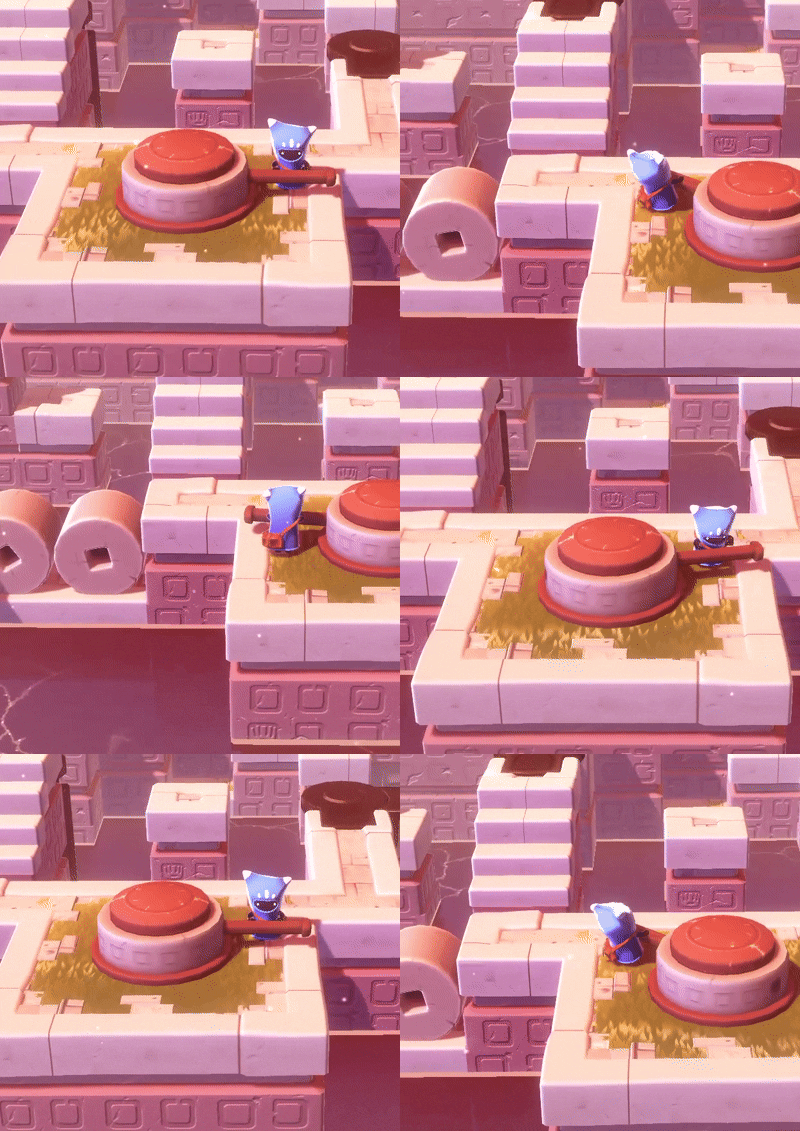
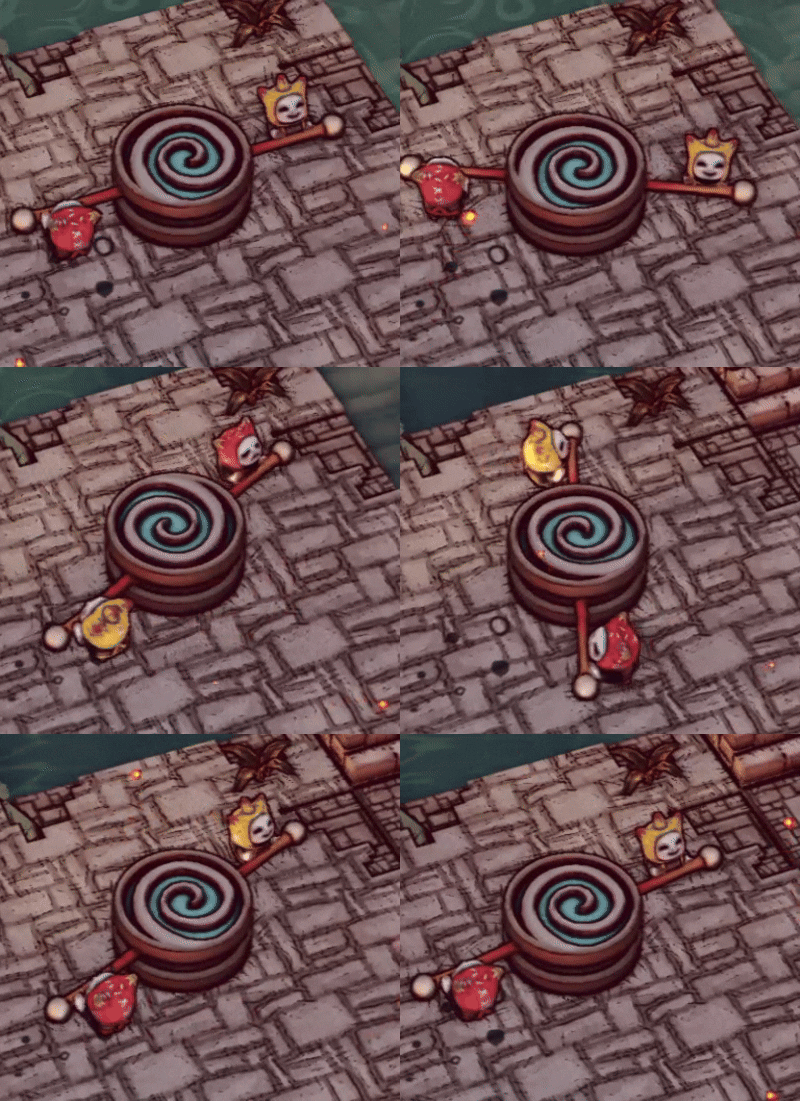
Spining lever - Mechanic redesign
The only mechanic that needed direct structural changes to become a two-player interactable. In its original form, a single player could operate it alone. The fix was simple but deliberate: both players must push in opposite directions simultaneously to start the spin, making it impossible to bypass and requiring coordination by design.
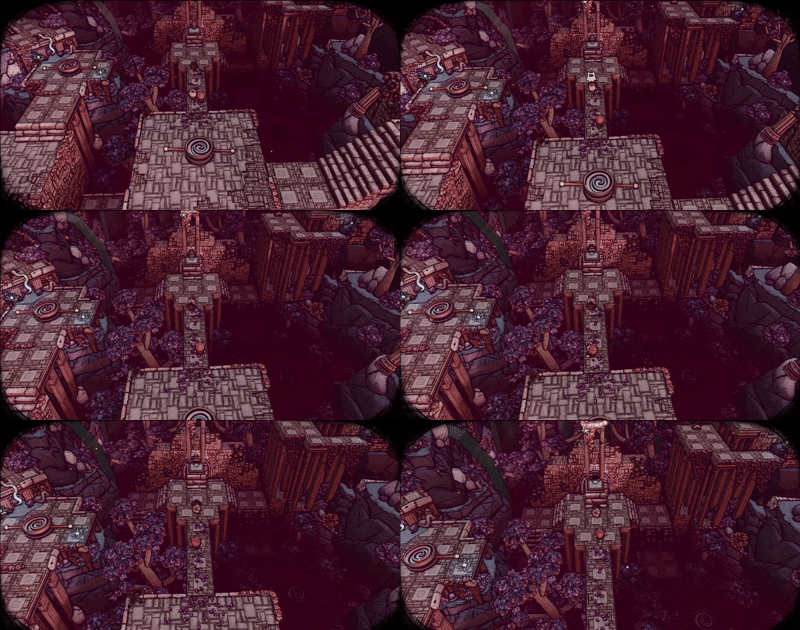
Camera - Designer's main tool
Because the camera is on-rails and always controlled between the two players, I had full authorship over what players could see at any moment, a constraint that paid off in both level design and art direction.

Puzzle Design - Design shift
Level Design & Planning
My Initial Layout
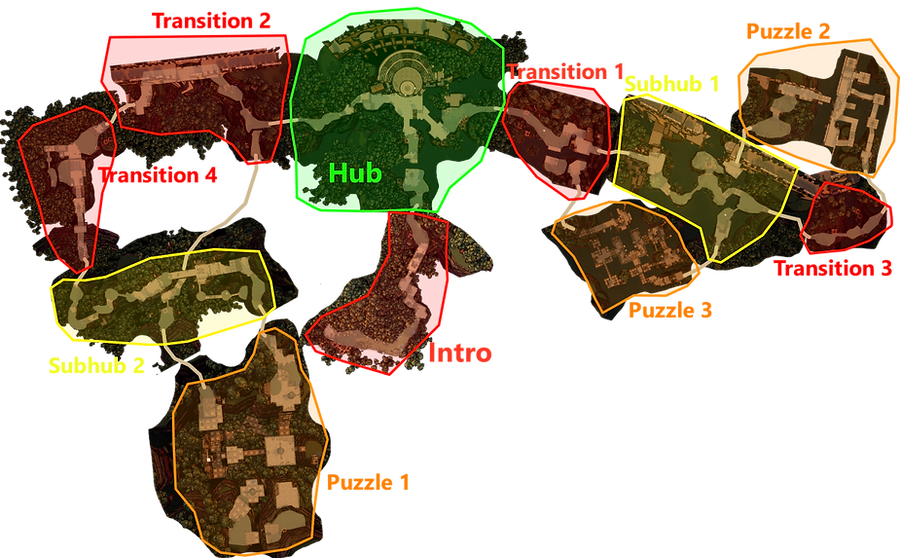
The overall layout was designed from the start around a hub-based player flow, explore fully from each hub, then return with as little backtracking as possible. This structure held from early planning through to final shipping, even as individual levels were cut.
Initial vs. final layout
The initial plan featured two main spokes from a central hub, each ending at a sub-hub shared between two NPC goals. Four NPCs became three due to time constraints, but the core flow, hub → explore → sub-hub → puzzle → return, stayed intact throughout.

Initial layout
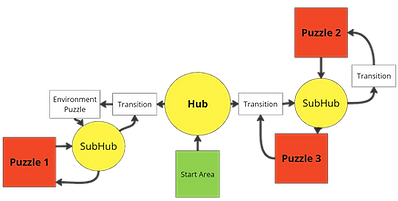
Final Layout
The Aqueduct
The aqueduct was a deliberate recurring element, threwout the game, that follows the player through the entire game as both a background element and an interactive element, the aqueduct is integrated into meny elements of the games world, from the third puzzle being fully focused around the aqueduct and other levels ether having the aqueduct as a guiding element giving context to the player, or being a space the player can interact with (like in Subhub 2 or Transition 2)


Puzzle 1
Transition 2
HUB
Sub Hub 2
Puzzle 3
Player Goals
The player's mission throughout the game is to reunite three missing cast members with the theatre troupe. Three is a deliberate number, enough to structure a journey with clear progression, without overwhelming the player with a list of objectives. Each cast member anchors a level and gives purpose to every space around them.
Overall layout — cast member placement and player flow

1
2
3

First Player Goal

Secund Player Goal

Thired Player Goal
Blockout & Whitebox
Flowchart → blockout → playtest → art pass
The levels was first planned through a flowchart, deciding the purpose of each level. After the levels was flowssharted, we took level by level and drew out a more detailed plan and layout, dividing our work among the 3 designers, one focusing on puzzle design, the other taking each half of the game's levels.
1
Planning & Overall Lyout
Drew up a flowchart covering the full game and level flow. Established the hub structure and spoke destinations before touching the engine.
2
Blockout/Whitebox
Blocked out level layouts using art-team blockout assets where available, letting us evaluate scale and camera framing early.
3
Playtesting & Iteraton
Due to the tight timeframe, most iterations focused on framing adjustments and layout changes to better serve camera composition, not really any major structural reworks.
4
Environment Art
Each level needed its own identity, primarily carried by environment art. The art team handled this pass while we refined gameplay.
Hub


Subhub 2


Problems & Solutions
Our main problem came from the importance of the hub area, because the hub area didn't have many unique interactions more than the central quest giver. The area was treated more like a transition space between the two sides of the world, where the endgoal where and less important central structure.
The hub wasn't earning its place
Proposed Solution
To elevate the hub's importance, we can introduce dynamic environmental changes each time a character is successfully returned.
Turning the central quest giver into a progression gate, tied directly to these environmental shifts, establishes the hub as a crucial space.
This redesign achieves a few key things:
-
Encourages Exploration: Players are naturally driven to explore newly unlocked sections of the hub.
-
Smooth Narrative Pacing: Returning to the quest giver to progress allows us to efficiently feed the player vital lore or information about the remaining target characters.
-
Scalability: This approach is highly time-effective and can easily be scaled up or down based on player feedback or development resources.


Project Showcase


Conclusion
The defining challenge of this project was navigating the design shift from a traditional single-player structure into a cohesive co-op experience. Adapting narrative progression, quest delivery, and player flow to support multiple users simultaneously forced me to completely re-evaluate how space is utilized. Ultimately, this taught me how to intentionally design environments that don't just host players, but actively foster communication, shared discovery, and collaborative problem-solving between them.
Thank you for taking the time to read this piece!
Måns